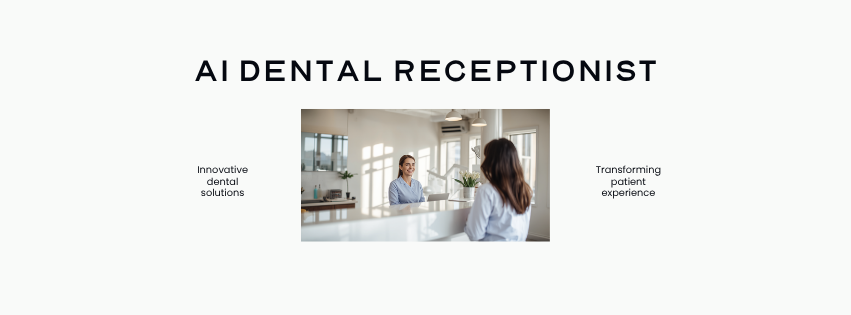
Every unanswered phone call at the front desk is a patient walking to a competitor. An AI dental receptionist fixes that gap directly: it answers every inbound call, books appointments around the clock, and texts back missed callers in seconds — without adding headcount. For dental practices across NJ, NY, and PA fighting front-desk turnover and packed schedules, this has quietly become the highest-ROI place to put AI to work.
The hidden revenue leak: missed calls
The numbers are blunt. According to Peerlogic’s analysis of new-patient dental calls, only 68% of calls are actually answered — roughly one in three new patients reaches a voicemail. Of the calls that do get answered, just 42% convert into a booked appointment. The math is brutal for a small practice: most callers who hit voicemail never call back, they simply dial the next office down the road.
The cause usually isn’t a bad team — it’s a human one. Front-desk staff are checking in patients, processing insurance, and managing the schedule when the phone rings during the 8–10 AM rush. An AI dental receptionist removes the tradeoff by answering in under two rings, every time, including evenings and weekends when roughly a third of patient calls actually arrive.
Front Desk: Human-Only vs. AI-Augmented
New-patient calls answered. Typical practice: ~68%. With an AI receptionist: every call.
Coverage hours. Typical practice: business hours only. With an AI receptionist: 24/7, including nights and weekends.
Missed-caller follow-up. Typical practice: manual, often skipped. With an AI receptionist: instant text-back.
Answer-rate figures: Peerlogic new-patient dental call analysis, 2026.
What an AI dental receptionist actually does
This isn’t a clunky phone tree. A modern AI receptionist holds a natural conversation, understands why the patient is calling, and acts on it: scheduling and rescheduling appointments, answering questions about hours, insurance, and procedures, and writing directly into the practice management system in real time. When a call does slip through, it sends an instant text so the lead never goes cold. Your existing team isn’t replaced — they’re freed to focus on the patient in the chair and the complex calls that genuinely need a human.
AI in healthcare is no longer experimental
Dental and medical practices adopting AI aren’t early adopters anymore — they’re mainstream. The American Medical Association’s 2026 survey found that 81% of physicians now use AI professionally, more than double the rate in 2023, with cutting administrative burden cited as the single biggest opportunity. Front-desk phone handling is exactly that kind of administrative load — high-volume, repetitive, and perfect for automation, as long as it’s deployed responsibly.
The catch: it has to be secure
An AI receptionist touches protected health information the moment it discusses a patient’s appointment or condition, which makes HIPAA the floor, not a feature. That means a signed Business Associate Agreement, encryption in transit and at rest, audit logging, and a guarantee that patient data is never used to train someone else’s model. This is where Aufsite comes in. As an AWS-focused managed services provider based in Princeton, NJ, we implement AI for dental and healthcare practices the secure way — through our Secure MCP Framework, which governs exactly how an AI assistant connects to your scheduling and patient systems, and our Dental PCA platform, purpose-built for dental practices. You get the patient-capture upside without handing over control of your data.
If your practice in NJ, NY, or PA is losing new patients to voicemail, an AI dental receptionist is one of the fastest wins available — but only when it’s built on secure, compliant infrastructure. Talk to Aufsite about implementing AI front-desk automation the right way, with a local team that handles the security, integration, and compliance for you.